Five ways micro-transactions will shake up iPhone gaming
Just a little bit extra...

 Talk to iPhone games developers, and the feature they're most excited about in the new iPhone 3.0 software is the ability to do in-game micro-transactions.
Right now, the only way to charge someone for your iPhone game is through a standard App Store purchase. You get your money up front, but you can't then charge players anything else.
That's changing with iPhone 3.0. And while you might wonder if this is just an excuse to get iPhone gamers to dip into their wallets even more often, it's actually a hugely positive thing for several reasons.
Downloadable content, virtual items, subscription billing and fast-track social advancement are some of them, so we thought we'd go into a bit more depth about what you can expect on the micro-payments side once iPhone 3.0 debuts.
 1. Downloadable content
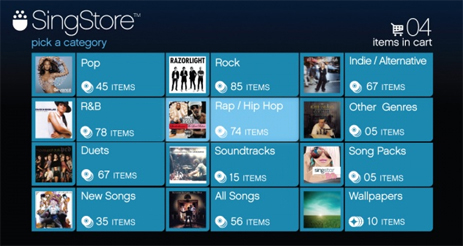
DLC is now an increasingly common feature in the console gaming world. Think SingStar songs, Guitar Hero tracks, Call of Duty maps and more. Developers launch a game, but then continue creating new content for it to keep the experience fresh.
This is what we're going to get with iPhone 3.0, although of course, it's not a new idea on Apple's platform. Developers have been providing new levels, tracks and missions in iPhone game updates since the beginning of the App Store. The problem is, they haven't made any money from it, because updates have to be free.
Hang on, people are going to start charging us for what they've given away for free so far? Swizz! Except the ability to charge means developers will have an economic motive (rather than just the goodness of their hearts) to put decent effort into producing DLC for their iPhone games - and on a more regular basis.
The risk: Some console games' DLC has rightly provoked a stink among gamers, who felt that it should have been featured in the original version. Extra content should be just that - extra - otherwise iPhone gamers will get just as shirty as their console counterparts.
2. Customisation and self-expression Another big thing about micro-transactions is the ability to sell virtual items within games. Yes, this is a form of downloadable content, and could arguably come under the first point, but there are subtle differences.
Virtual items can be used in two ways. The first is for customisation and self-expression - i.e. in forms that don't affect the gameplay itself, but instead let you personalise the game. Outfits for a character, decals for cars, furniture for virtual homes... That kind of thing.
These kinds of virtual items have, unsurprisingly, been most common in virtual worlds like Second Life and Habbo Hotel. However, they've also been becoming more popular in social games on Facebook, like Playfish's Pet Society with its thriving furniture stores.
It's tempting to scoff at these kinds of items, especially when they don't give you a leg-up in gameplay terms. But there's a reason they're popular elsewhere - how your character or virtual space looks matters to the point where many people would happily pay to have it just so.
As iPhone gets more and more online games offering 3D (and even 2D) virtual environments in which to play, virtual items will become commonplace. EA Mobile's The Sims 3 is just the start of it.
The risk: If gamers are going to pay to personalise, they really do want to personalise. Any game selling virtual items for real money will have to provide a wide choice and constant flow of new items, rather than a narrow range of similar stuff.
3. Gameplay-enhancing virtual items The flipside of virtual items is items that actually change the gameplay. Better weapons and armour in first-person shooters, for example, or a better engine for your car.
Charging for this kind of stuff is, of course, only sustainable for multiplayer games. Doing it for solo titles will only elicit reactions of 'so you charged me for your game - now you want me to pay more to be able to complete it?'
But for online gaming, there will always be players happy to pay for items that will help them, whether it's MMOs (think of the thriving online trade in weapons and/or gold for some games), racing games, strategy titles where you pay for specialist army units, and so on.
In the past, particularly for MMOs, players ended up using eBay or other methods to buy items, as the developers didn't support it. However, games firms have woken up to the value of these kinds of items, and want a piece of the loot.
iPhone will be no different, and many players won't be able to resist a game-enhancing shortcut if they get their wallets out.
The risk: As ngmoco has already pointed out in discussion about using micro-transactions in its LiveFire online FPS for iPhone, letting people pay for gameplay enhancements can play merry hell with the balancing of a multiplayer game. Weighting the effects of these items against the need to not penalise players who haven't paid is a fine balancing act indeed.
4. Fast-track through social games One very specific use for micro-transactions comes in social games - for example all those mafia titles on the App Store, and their less mob-handed equivalents like Girl Wars and Epic Pet Wars and... well, anything else ending in 'Wars.'
Many of these games have already tried to charge players for a headstart in the game with their internal points systems. Respect points in mafia games, for example, can be used to buy weapons, heal your character, recruit virtual thugs or beef up your in-game property portfolio.
Currently, the way of charging for these points is to release more expensive versions of the games on the App Store, which come with a certain number of points at the start. Some companies have tried billing via credit-card within the games for points boosts, but Apple has swiftly squashed the practice.
Once micro-transactions are up and running with iPhone 3.0, such points boosts will be easy and legitimate to do. And as anyone who's got addicted to iMob Online and its ilk can testify, the option to quickly recover your status or arm yourself to the teeth is often worth paying for.
The risk: Like point three, if games are designed around the concept of HAVING to pay regularly just to keep up with other players, it won't be good news for gamers - or for the developers, once their player communities realise they're being fleeced.
5. Subscription billing iPhone 3.0's micro-transactions feature also enables subscription billing, bringing a model that's been common in the US for mobile games for some years, but never quite caught on in Europe. Mainly because for us, 'subscription' meant 'rip-off'.
But actually, subscription billing can be a great thing, particularly for online games. 12 million World of Warcraft players can tell you that. The reason is these games cost money beyond their launch - servers, maintenance, support and the kind of new features discussed in point 1.
The ability to charge a recurring monthly subscription will mean we see more MMOs on iPhone, and more ambitious ones at that. Developers won't have to worry that if they attract 100,000 or even a million players, they'll go bankrupt through costs a few months down the line.
The risk: We sincerely hope developers don't take the US mobile game approach to subscriptions - getting people to pay a couple of quid a month for a one-player game that never changes, and hoping they forget that they're paying for four or five months.